Methodology
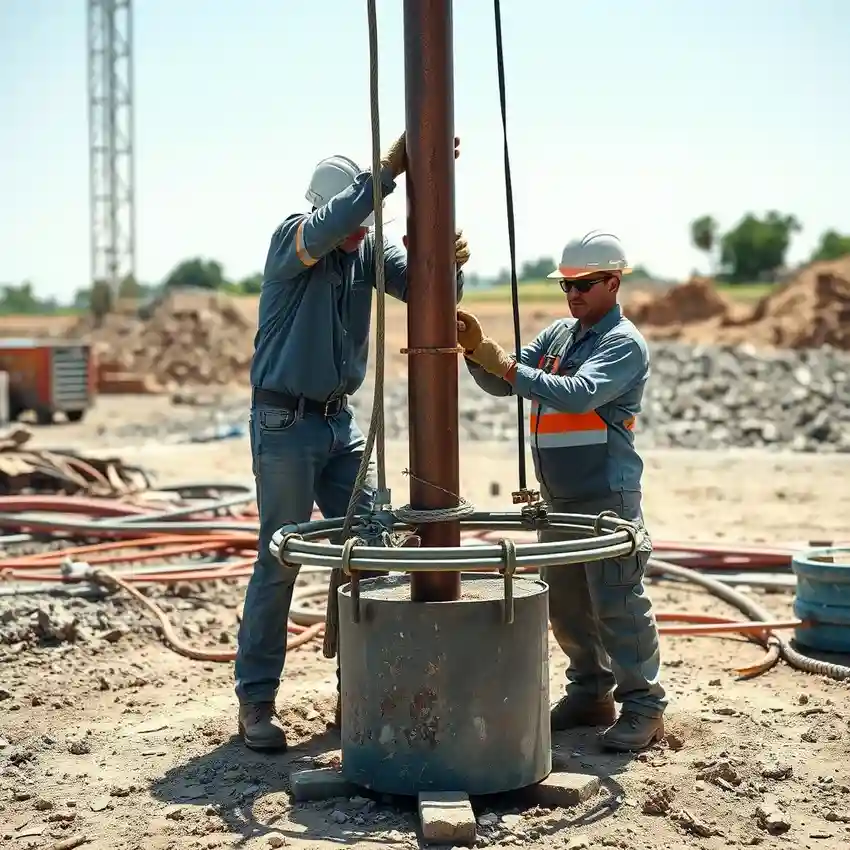
Our general approach to water well drilling in Chicago begins with a comprehensive site assessment to understand the local stratigraphy, from surface soils to the target aquifer. This informs the selection of drilling technique—whether rotary for deeper sandstone formations or cable tool for certain glacial deposits. A critical phase involves the proper design and installation of the well casing and screen to ensure structural integrity and optimal water yield, followed by systematic well development to remove drilling fluids and fines. For detailed procedures on our drilling techniques, refer to our page on water well drilling.
Reference Technical Parameters
| Parameter | Reference Value |
|---|---|
| Predominant soil type | Glacial Till (Clay, Silt, Sand, Gravel mixtures) |
| Typical groundwater level | 5 - 50 ft below ground surface |
| Bedrock depth (Dolomite) | 50 - 150 ft (highly variable) |
| Maximum seismic acceleration (PGA) | 0.1g - 0.2g (Site Class dependent) |
| Typical SPT N60 range | 10 - 50 blows/ft (variable with depth and material) |
Local Considerations — Chicago
Chicago's geology and regulations present unique considerations for water well projects. Firstly, the subsurface is dominated by glacial deposits—clay till, outwash sands, and gravels—overlying dolomite bedrock, with aquifer productivity highly variable. Secondly, the static water level is generally shallow, often within 20 feet of the surface near Lake Michigan, but can be deeper inland. Thirdly, while not in a high seismic zone like the West Coast, local building codes still require consideration of soil stability. Fourthly, a key contrast exists between the high-yield sand and gravel aquifers in suburban valleys versus the lower-yield, shale-influenced areas near the bedrock surface. Finally, typical cases involve navigating Illinois Department of Natural Resources (IDNR) permits and Cook County health regulations, which mandate specific construction standards and water quality testing. A preliminary hydrogeological survey is often essential for navigating these local complexities successfully.
Request a Quote
Our team reviews your project and issues an initial report at no cost.
Or write us directly at [email protected]
Services in Chicago
Locations covered in Chicago
Applicable Standards
- Illinois Water Well Construction Code (77 Ill. Adm. Code 920)
- Cook County Private Water Supply Ordinance
- Illinois Environmental Protection Agency (IEPA) Regulations
- ASTM D5092 (Standard Test Method for SPT)
Frequently Asked Questions
How do Chicago's soil types affect well drilling and design?
The prevalent glacial till, containing layers of clay, sand, and gravel, directly influences drilling method selection, casing point determination, and screen design. Clay layers can slow drilling progress and require specific mud programs, while sand and gravel layers are target aquifers but require properly sized screens to prevent sand intrusion and ensure well efficiency.
What are the key regulatory requirements for drilling a water well in Chicago?
Primary requirements include obtaining a permit from the Illinois Department of Natural Resources (IDNR), adhering to strict construction standards for casing and grouting as per the Illinois Water Well Construction Code, and submitting a well completion report. In Cook County, additional health department regulations govern location setbacks and mandatory water quality testing following [pump installation](/pump-installation/).
Is a hydrogeological study mandatory before drilling a well in the Chicago area?
While not always mandated by code for every single-family residential well, a professional hydrogeological survey is highly recommended and often required for commercial, industrial, or municipal projects, or in areas with known complex geology or contamination concerns. It is a critical risk-mitigation step to ensure proper well placement, predict yield, and assess water quality.