Methodology
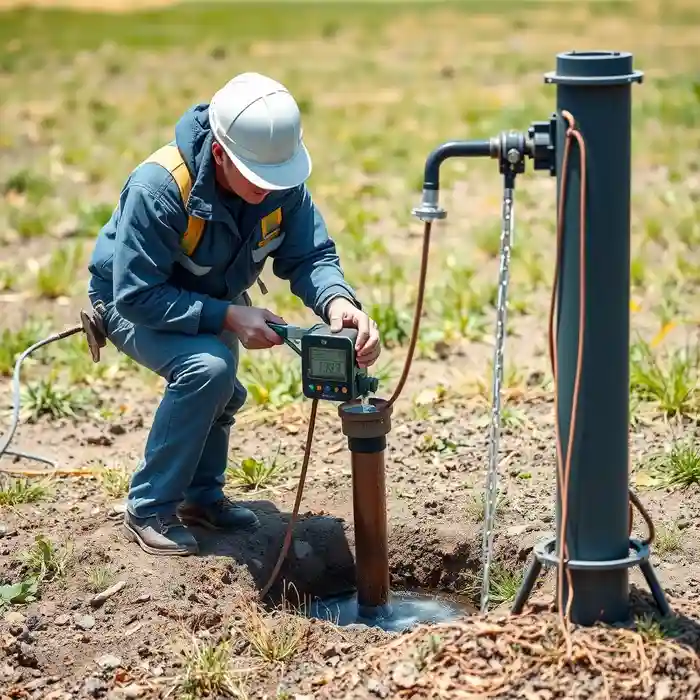
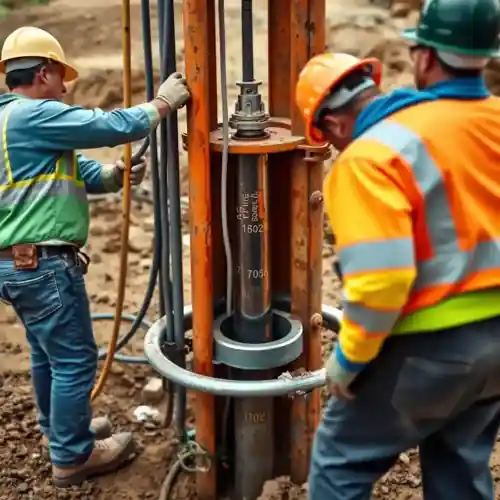
Our approach to water well drilling in New York begins with a comprehensive site assessment to evaluate the overburden thickness and bedrock characteristics. This informs the selection of the appropriate drilling method, whether cable tool for deep, consolidated rock or rotary for unconsolidated glacial deposits. A critical phase is the proper design and installation of the well casing and screen to ensure structural integrity and optimal water yield from the target aquifer, followed by systematic well development to remove fine sediments and maximize efficiency.
Reference Technical Parameters
| Parameter | Reference Value |
|---|---|
| Predominant Soil Type | Glacial Till, Sand & Gravel Outwash, Fill |
| Bedrock Depth | 0 to >200 ft (Highly Variable) |
| Typical Groundwater Level | 10 - 50 ft below surface (variable with location) |
| Maximum Seismic Acceleration (PGA) | Site-Specific, per NYC Building Code |
| Typical SPT N60 Range | Wide range, from low in fill/clay to high in dense till/gravel |
Local Considerations — New York
1. **Geology & Soil:** New York's subsurface is defined by a complex sequence of glacial deposits (till, outwash, lacustrine clays) overlying crystalline bedrock (Manhattan Schist, Fordham Gneiss). The depth to bedrock varies dramatically, from at surface in northern Manhattan to over 200 feet in parts of Long Island. 2. **Groundwater Level:** The water table is generally shallow on Long Island due to its extensive aquifer system but can be deep and variable in bedrock areas, influenced by fracturing. 3. **Seismicity:** While considered a low-to-moderate seismic zone, site-specific seismic design considerations, including liquefaction potential in saturated sandy soils, are evaluated. 4. **Neighborhood Contrast:** Projects in coastal areas of Staten Island or Brooklyn must account for saltwater intrusion risks, mandating careful well depth and pumping rate management, unlike inland sites. 5. **Typical Cases:** A common scenario involves drilling through heterogeneous fill and glacial till to reach a productive sand and gravel aquifer, requiring robust hydrogeological survey during planning.
Request a Quote
Our team reviews your project and issues an initial report at no cost.
Or write us directly at [email protected]
Services in New York
Locations covered in New York
Applicable Standards
- New York State Department of Environmental Conservation (NYSDEC) Regulations
- New York City Building Code
- US Environmental Protection Agency (EPA) Standards
Frequently Asked Questions
What types of soil and rock are commonly encountered during well drilling in New York?
Drillers typically encounter man-made fill, followed by a complex package of Pleistocene glacial deposits including unsorted till, stratified sand and gravel outwash, and lacustrine clays. Beneath these, the crystalline bedrock of the Manhattan Schist or Fordham Gneiss is reached. The specific sequence and properties vary greatly, influencing drilling speed and method selection.
Are seismic design considerations required for water wells in New York?
While not always the primary focus for small residential wells, seismic design is a critical engineering consideration for larger, deeper, or critical infrastructure wells. The New York City Building Code defines seismic design categories, and site-specific evaluation of liquefaction potential in saturated granular soils is essential for ensuring long-term well integrity.
Is a hydrogeological study mandatory before drilling a water well in New York?
While not universally mandatory for all private wells, a professional hydrogeological survey is highly recommended and is often required by local health departments or for commercial/industrial projects. It is crucial for determining aquifer yield, avoiding contaminant sources, designing an efficient well, and securing the necessary NYSDEC permits.