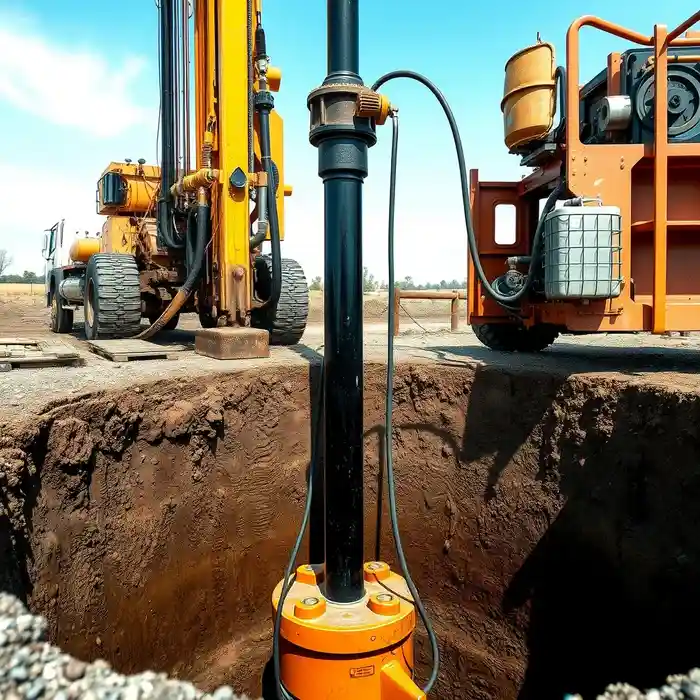
Methodology
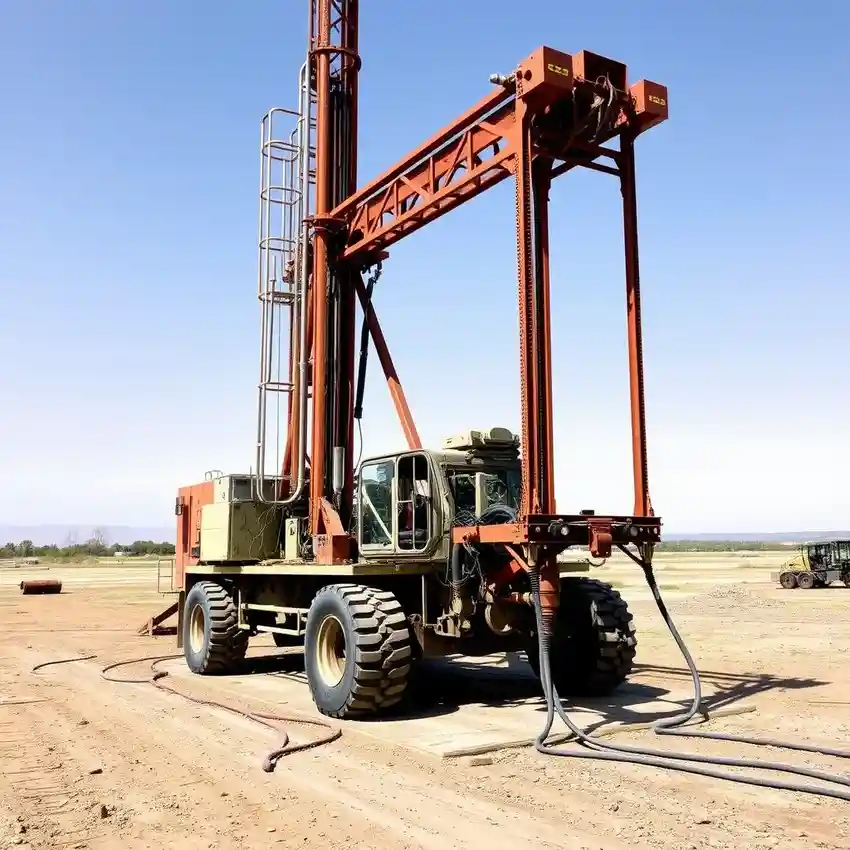
Our approach in Worcester begins with a thorough site assessment, reviewing existing well logs and geological surveys. We then employ rotary or percussion drilling methods suited to the local conditions, often transitioning through layers of glacial till, sand, and gravel before socketing into the underlying bedrock. Continuous monitoring during the water well drilling process allows us to log formation changes and identify optimal water-bearing fractures. The well is then properly cased, developed to remove fine sediments, and tested to ascertain sustainable yield and water quality, ensuring a compliant and long-lasting installation.
Reference Technical Parameters
| Parameter | Reference Value |
|---|---|
| Predominant Soil Type | Glacial Till (Unsorted Clay, Sand, Gravel, Boulders) |
| Typical Bedrock Depth | 20 - 100 feet (Highly Variable) |
| Primary Aquifer Type | Fractured Crystalline Bedrock |
| Maximum Seismic Acceleration (PGA) | Site-Specific Evaluation Recommended |
| Typical Well Depth Range | 200 - 500 feet |
Local Considerations — Worcester
1. **Geology & Overburden**: The area is characterized by thick glacial till deposits overlying metamorphic bedrock. Well design must account for unstable surficial materials before stabilizing in bedrock. 2. **Water Table & Aquifers**: Primary water sources are fractured bedrock aquifers. Water levels can be deep, and yield is highly dependent on intersecting productive fracture zones. 3. **Seismic Context**: While not the highest seismic zone, site-specific assessment is prudent. 4. **Neighborhood Contrast**: Yields can vary significantly between adjacent properties due to the erratic nature of glacial deposits and bedrock fracturing. 5. **Typical Cases**: Many projects involve replacing older, shallow dug wells with modern drilled bedrock wells to improve yield and safety, a process where a detailed hydrogeological survey is invaluable. For large-scale regional expertise, learn about our comprehensive water well drilling services based in New York.
Request a Quote
Our team reviews your project and issues an initial report at no cost.
Or write us directly at [email protected]
Services in Worcester
Applicable Standards
- Massachusetts Well Driller License (Code of Massachusetts Regulations 310 CMR 46.00)
- MassDEP Private Well Guidelines
- Local Worcester Board of Health Regulations
- ASTM Standards for Water Well Construction
Frequently Asked Questions
What are the main soil and rock challenges for drilling a well in Worcester?
The primary challenge is the heterogeneous glacial overburden, which contains everything from fine sands to large boulders, making drilling progress unpredictable. Beneath this, the crystalline bedrock requires specialized equipment to drill and must be strategically fractured to yield sufficient water. Proper well construction through these materials is critical to prevent collapse and surface contamination.
Are there specific seismic regulations for well construction in Worcester?
While Massachusetts building code includes seismic provisions, well construction regulations focus primarily on sanitary protection and construction standards. However, responsible well design considers overall site geology. Our designs ensure the well casing and seal can withstand regional hydrogeological stresses, including potential seismic activity.
Is a water quality test mandatory after drilling a new well in Worcester?
Yes. Massachusetts regulations and local Worcester Board of Health requirements mandate that water from a newly drilled well be tested for a suite of contaminants, including bacteria, nitrates/nitrites, and certain metals, before being put into use. We ensure proper sampling procedures are followed to meet all compliance standards.