Methodology
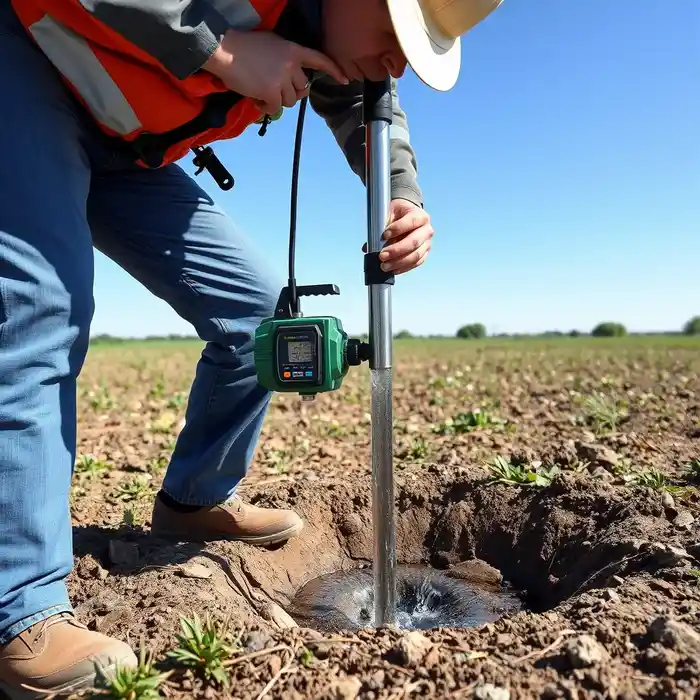
Our approach in Aurora begins with a thorough review of existing hydrogeologic data and Colorado Division of Water Resources records for the area. Site-specific investigation follows to confirm subsurface conditions. The actual water well drilling process is then tailored to the target aquifer, utilizing rotary or percussion methods suitable for the expected soil and rock sequences. We meticulously log cuttings, install appropriate casing and screen, and develop the well to optimize yield and longevity, ensuring construction meets all state and local standards.
Reference Technical Parameters
| Parameter | Reference Value |
|---|---|
| Predominant Near-Surface Soil Type | Alluvial sands and gravels (west), clayey/silty overburden (east) |
| Typical Bedrock Depth (to Arapahoe Fm.) | 50 - 300 feet (highly variable) |
| Typical Groundwater Level (Alluvial) | 10 - 50 feet below ground surface |
| Maximum Probable Seismic Acceleration (PGA) | Site Class D, value per ASCE 7-22 |
| Typical SPT N60 Value (Alluvial) | 15 - 50 blows/foot |
Local Considerations — Aurora
1. **Geology & Aquifers**: Aurora overlies the South Platte River alluvial aquifer (unconsolidated sands/gravels) and the deeper, confined bedrock aquifers of the Denver Basin (Arapahoe, Denver formations). Well design differs drastically between these sources. 2. **Water Rights & Permitting**: Colorado's prior appropriation doctrine ('first in time, first in right') is strictly enforced. A hydrogeological survey is often critical for securing a well permit from the State Engineer. 3. **Contrast by Area**: Eastern areas (near Buckley SFB) often target deeper bedrock wells, while western parcels near the river may utilize shallower alluvial wells. 4. **Typical Projects**: Common scenarios include residential exemptions, agricultural use, and non-tributary wells for subdivisions. 5. **Regional Expertise**: Our team's experience across the Front Range, including major projects from our water well drilling team in Chicago, informs best practices for Aurora's unique conditions.
Request a Quote
Our team reviews your project and issues an initial report at no cost.
Or write us directly at [email protected]
Services in Aurora
Applicable Standards
- Colorado Division of Water Resources Rules & Regulations
- 2 CCR 402-1 (Well Construction and Pump Installation Rules)
- ASCE 7-22 (Seismic Design Criteria)
- Local Aurora Building & Zoning Codes
Frequently Asked Questions
What are the main soil and rock challenges for drilling a water well in Aurora?
The primary challenge is the heterogeneity. Western areas feature loose, cobble-rich alluvial deposits prone to collapse, requiring careful drilling fluid management and casing. Eastern sections require drilling through significant overburden before penetrating the hard, fractured sandstones of the Denver Basin bedrock, which demands robust equipment and may involve lost circulation zones.
How does Colorado water law impact getting a well permit in Aurora?
Colorado law requires that a new well permit demonstrates it will not injure existing senior water rights. For many properties, this necessitates a detailed aquifer test and analysis to prove the well is either exempt (e.g., certain domestic uses) or that its withdrawal is non-tributary to surface streams. Navigating this legal and technical process is a critical first step.
Is a hydrogeological study always required before drilling a well in Aurora?
While not always legally mandatory for every exempt well, a professional hydrogeological study is highly recommended. It determines the optimal aquifer target, estimates sustainable yield, and provides the technical foundation required for most permit applications with the State Engineer, significantly reducing the risk of a dry or non-compliant well.