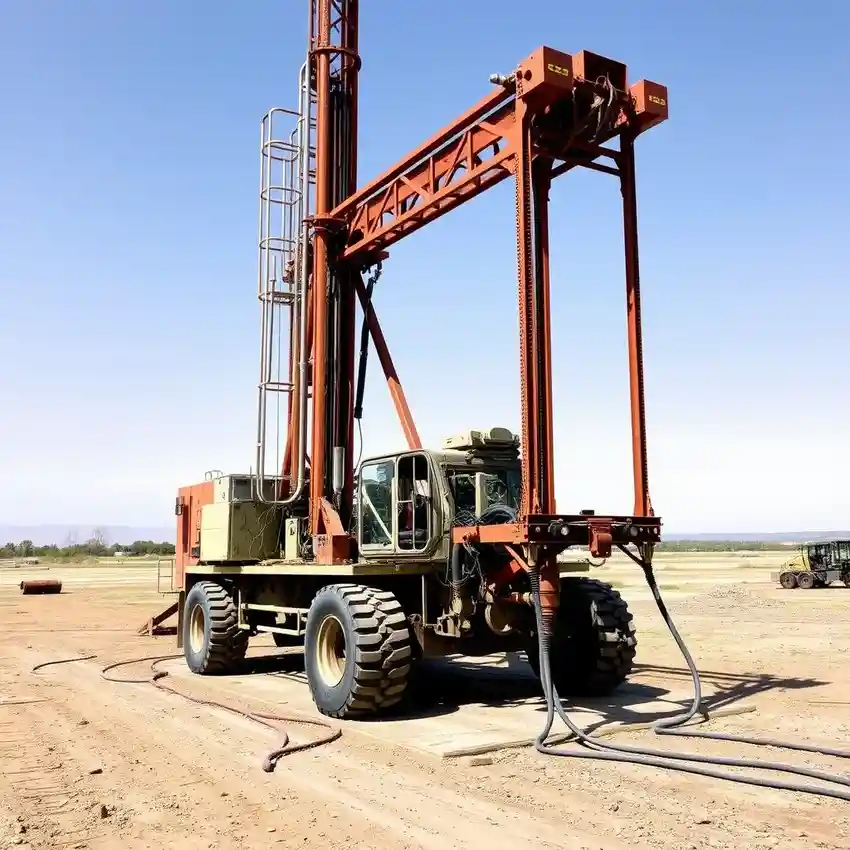
Methodology
Our approach in the St Louis area begins with a comprehensive assessment of the site's hydrogeological context. We analyze geological maps, historical well data, and surface features to identify promising aquifer zones. The subsequent water well drilling phase is tailored to the specific subsurface conditions encountered, employing techniques designed to maximize well efficiency and longevity while ensuring full regulatory compliance from inception to completion.
Reference Technical Parameters
| Parameter | Reference Value |
|---|---|
| Predominant Soil Type | Glacial Till, Loess, Alluvial Deposits |
| Bedrock Depth (Typical Range) | 50 - 150 ft below surface |
| Typical Groundwater Level | 20 - 80 ft below surface |
| Maximum Seismic Acceleration (PGA) | 0.2g - 0.4g (Site Specific) |
| Standard Penetration Test N60 Range | Variable per ASTM D5092 |
Local Considerations — St Louis
1. The subsurface in St Louis is characterized by complex glacial drift deposits overlying carbonate bedrock, creating variable aquifer yields that require precise targeting. 2. Groundwater levels can be influenced by proximity to the Mississippi and Missouri Rivers, as well as historic industrial sites, necessitating thorough preliminary analysis which you can learn more about in our hydrogeological survey services. 3. Seismic activity related to the New Madrid Seismic Zone requires well construction designs that consider soil liquefaction potential in certain areas. 4. Contrasts exist between the deeper, more productive aquifers in the surrounding counties and the more challenging, shallow conditions within the urban core. 5. A typical case involves navigating layered clay, sand, and gravel sequences to reach a reliable water-bearing zone, a process where expertise from our primary operations hub in water well drilling services based in Chicago informs our local best practices.
Request a Quote
Our team reviews your project and issues an initial report at no cost.
Or write us directly at [email protected]
Services in St Louis
Applicable Standards
- Missouri Department of Natural Resources (MDNR) Regulations
- St Louis County Well Construction Codes
- EPA Underground Injection Control (UIC) Guidelines
Frequently Asked Questions
What are the common soil and rock challenges for water well drilling in St Louis?
The primary challenges include heterogeneous glacial deposits with interbedded clay, sand, and gravel, which can vary significantly over short distances. Drilling through these unconsolidated materials to reach the deeper, more stable carbonate bedrock aquifers requires specialized equipment and techniques to prevent borehole collapse and ensure proper well screen placement.
Are seismic design considerations required for water wells in St Louis?
While not always mandated for every residential well, prudent engineering practice in the St Louis area considers the seismic hazard from the New Madrid zone. For commercial, industrial, or critical supply wells, design may need to address potential ground shaking and liquefaction, influencing well casing specifications and grouting procedures.
Is a preliminary subsurface investigation mandatory before drilling a well?
While not universally required by code, a site-specific evaluation is highly recommended. Given the geological variability, such an assessment is the best method to predict aquifer depth and yield, select the appropriate drilling method, and avoid costly, non-productive boreholes, ensuring an efficient and compliant project.