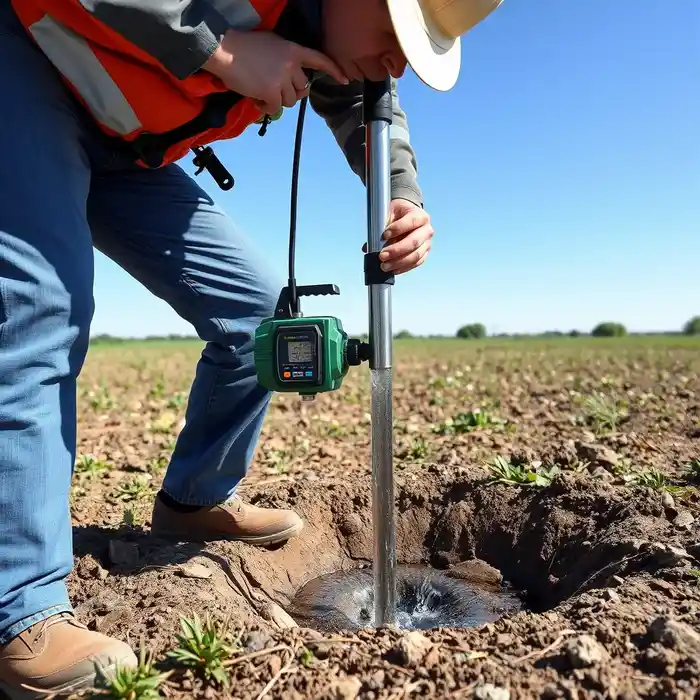
Methodology
Our approach to water well drilling in Cleveland begins with a thorough understanding of the local glacial sequence. We assess the complex layering of clay, till, sand, and gravel deposits to identify productive aquifers. This foundational knowledge guides the entire process, from site selection to the final development of the well, ensuring a reliable water supply. For a detailed breakdown of our process, please visit our page on water well drilling.
Reference Technical Parameters
| Parameter | Reference Value |
|---|---|
| Predominant Soil Type | Glacial Till, Lacustrine Clay, Sand & Gravel |
| Bedrock Depth (Typical) | 50 - 150 ft |
| Typical Groundwater Level | 10 - 30 ft below surface |
| Maximum Seismic Acceleration (PGA) | 0.10g - 0.15g |
| Typical SPT N60 Range | Variable; 5-30 in till, 20-50 in dense sand |
Local Considerations — Cleveland
Cleveland's geology presents unique considerations for water well drilling. The city sits on glacial deposits overlying shale bedrock. Groundwater levels are generally high due to proximity to Lake Erie, but can vary significantly. Seismic risk, while moderate, requires design consideration. In eastern suburbs, deeper wells into sand and gravel aquifers are common, while areas near the lake may contend with potential salinity influences. A professional hydrogeological survey is highly recommended to navigate these variables. For major regional projects, our team also provides comprehensive water well drilling services from our Chicago hub.
Request a Quote
Our team reviews your project and issues an initial report at no cost.
Or write us directly at [email protected]
Services in Cleveland
Applicable Standards
- Ohio Department of Natural Resources (ODNR) Division of Water Resources regulations
- Ohio EPA standards for private water systems
- Local county health department codes
Frequently Asked Questions
What are the common soil and aquifer conditions for water wells in Cleveland?
Cleveland's subsurface is dominated by glacial deposits. Productive aquifers are typically found in stratified sand and gravel layers within the glacial till. The depth to reliable water-bearing zones and the thickness of these layers can vary considerably across the city and its suburbs, necessitating site-specific investigation.
Are there specific seismic design considerations for wells in Cleveland?
While not in a high seismic zone, Cleveland is subject to building codes that account for ground motion. Well design, particularly casing selection and grouting, should consider potential seismic loads to ensure long-term integrity, especially in areas with softer soils.
Is a hydrogeological study mandatory before drilling a well in Cleveland?
While not always mandated by code for every single-family well, a professional hydrogeological study is strongly advised. It is crucial for identifying the optimal aquifer, predicting yield, assessing water quality risks, and ensuring the well's design complies with all state and local regulations, preventing costly failures.