Methodology
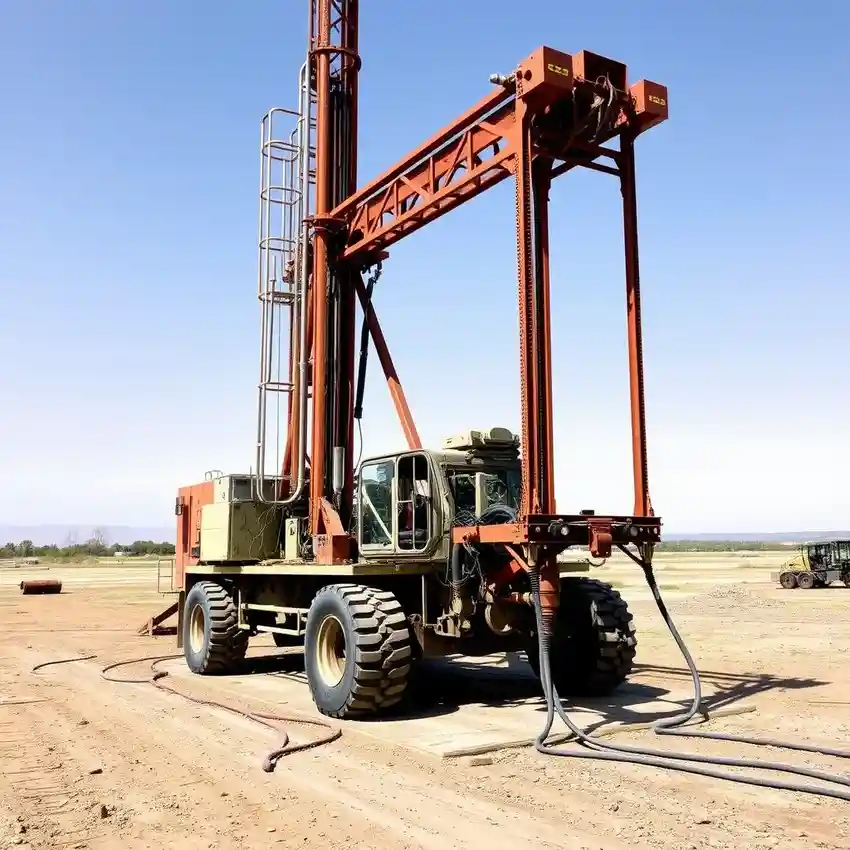
Our approach to water well drilling in Des Moines begins with a comprehensive assessment of the site's potential. We analyze regional geologic maps and historical well data to understand the stratigraphy, primarily consisting of glacial till and outwash deposits overlying sedimentary bedrock. This preliminary work informs the drilling strategy, whether for shallow alluvial wells or deeper bedrock wells targeting the Cambrian-Ordovician aquifer system. The actual water well drilling process is executed with precision, utilizing techniques suited to the unconsolidated soils and underlying sandstone. Each phase, from borehole advancement to well development, is meticulously managed to ensure optimal well performance and longevity.
Reference Technical Parameters
| Parameter | Reference Value |
|---|---|
| Predominant Soil Type | Glacial Till (Clay, Silt, Sand, Gravel mixtures) |
| Typical Groundwater Level | 10 - 50 ft below ground surface |
| Bedrock Depth (Top of Paleozoic) | 50 - 300 ft (highly variable) |
| Primary Bedrock Aquifer | Jordan Sandstone (Cambrian-Ordovician) |
| Maximum Seismic Acceleration (PGA) | ≤ 0.10g (USGS Seismic Zone 1) |
Local Considerations — Des Moines
1. **Geology & Aquifers**: Des Moines sits atop thick sequences of Pleistocene glacial drift, including till and sand/gravel aquifers, which overlie deeper Paleozoic sedimentary bedrock. The Jordan Sandstone is a primary bedrock aquifer target. 2. **Groundwater Level**: Water tables are generally shallow, often within 10-30 feet of the surface in river valleys, but can be deeper on uplands. 3. **Seismic Context**: While not a high seismic zone, localized seismic activity is considered in well design for long-term integrity. 4. **Urban vs. Rural Contrast**: In urban areas, well placement must consider existing infrastructure and potential contamination plumes, whereas rural sites offer more flexibility but require careful hydrogeological survey to locate productive zones. 5. **Typical Cases**: Residential wells often tap shallow sand and gravel aquifers, while high-capacity agricultural or municipal wells frequently target the deeper bedrock formations. For complex projects across major metropolitan areas, our team leverages extensive experience from our operations, including water well drilling services from our Chicago hub.
Request a Quote
Our team reviews your project and issues an initial report at no cost.
Or write us directly at [email protected]
Services in Des Moines
Applicable Standards
- Iowa Department of Natural Resources (DNR) - Water Well Construction Standards
- Iowa Administrative Code 567 - Chapter 82
- Des Moines Municipal Code - Water Resource Protection
- EPA Underground Injection Control (UIC) Regulations
Frequently Asked Questions
What types of soil and rock are typically encountered during well drilling in Des Moines?
Drilling typically progresses through unconsolidated glacial deposits, including layers of clay-rich till, silts, and lenses of sand and gravel which can act as shallow aquifers. These overlie consolidated sedimentary bedrock, primarily sandstones and carbonates of the Paleozoic era, which host the region's deeper, more extensive aquifer systems.
Are there specific seismic design considerations for water wells in Des Moines?
Des Moines is located in a low seismic hazard zone. While not a primary design driver, prudent engineering practice for permanent structures, including well casings in critical applications, considers baseline seismic loads to ensure long-term resilience against any potential ground motion, aligning with general good construction standards.
Is a hydrogeological study mandatory before drilling a water well in Des Moines?
While not always mandated by code for single-family residential wells, a professional hydrogeological assessment is highly recommended and often required for commercial, agricultural, or high-yield municipal wells. It is essential for identifying the appropriate aquifer, predicting yield, ensuring water quality, and securing necessary permits from the Iowa DNR.