Methodology
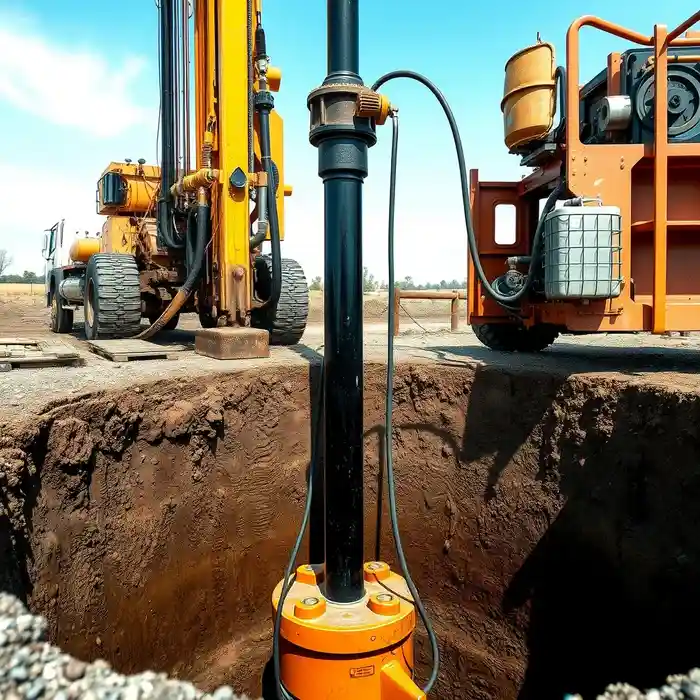
Our approach in Winston Salem begins with a thorough site assessment to evaluate the overburden thickness and identify optimal drilling targets within the fractured bedrock aquifers. We employ rotary and percussion drilling techniques suited to the resistant Piedmont formations. The process involves careful casing and screen selection to match the subsurface conditions, followed by systematic well development to maximize yield and ensure long-term performance. Each project is managed with precise logging and documentation, adhering to state guidelines. For a detailed breakdown of our process, see our water well drilling methodology.
Reference Technical Parameters
| Parameter | Reference Value |
|---|---|
| Predominant Soil Type | Saprolite (weathered rock) |
| Typical Bedrock Depth | 15 - 100 ft |
| Typical Groundwater Level | Variable, 20 - 150 ft below surface |
| Maximum Seismic Acceleration (PGA) | Low to moderate (site-specific evaluation) |
| Typical Standard Penetration Test (SPT) N60 Range in Overburden | Variable, depending on weathering grade |
Local Considerations — Winston Salem
1. **Geology & Soil:** The Piedmont region features a thick layer of weathered saprolite over crystalline bedrock (e.g., granite, gneiss), requiring robust drilling equipment. 2. **Water Table:** The depth to groundwater is highly variable, influenced by topography and bedrock fracturing; shallow aquifers are common in valleys. 3. **Seismic Activity:** Winston Salem is in a low-to-moderate seismic zone; while not a primary design driver, general stability considerations are factored into well construction. 4. **Area Contrasts:** The water-yielding potential differs significantly between areas underlain by fractured rock versus dense, unfractured bedrock, necessitating a pre-drilling hydrogeological survey. 5. **Typical Projects:** Common scenarios include deep residential wells in rural outskirts and high-yield wells for agricultural operations, where understanding local geology is paramount, much like our extensive work in water well drilling services from our Atlanta hub.
Request a Quote
Our team reviews your project and issues an initial report at no cost.
Or write us directly at [email protected]
Services in Winston Salem
Applicable Standards
- North Carolina Well Construction Standards
- Forsyth County Environmental Health Department Regulations
- National Ground Water Association (NGWA) Guidelines
Frequently Asked Questions
What are the main soil and rock challenges for drilling a water well in Winston Salem?
The primary challenge is the transition from unconsolidated, clay-rich saprolite to hard, crystalline bedrock. This requires drilling rigs capable of handling both material types and expertise in identifying productive fracture zones within the bedrock, which are the main water-bearing features in the Piedmont.
Are seismic studies required for water well permits in Winston Salem?
While not typically a requirement specifically for water well permits, understanding the local seismic context is part of a responsible subsurface evaluation. The main regulatory focus for permitting is on well construction standards, sanitary protection, and ensuring no aquifer contamination.
Is a hydrogeological study mandatory before drilling a well in Forsyth County?
A formal study is not always mandated for a single residential well, but it is highly recommended. For commercial, agricultural, or high-yield wells, or in areas with known water scarcity or complex geology, a professional assessment is crucial for predicting yield, ensuring sustainability, and meeting certain county requirements.