Methodology
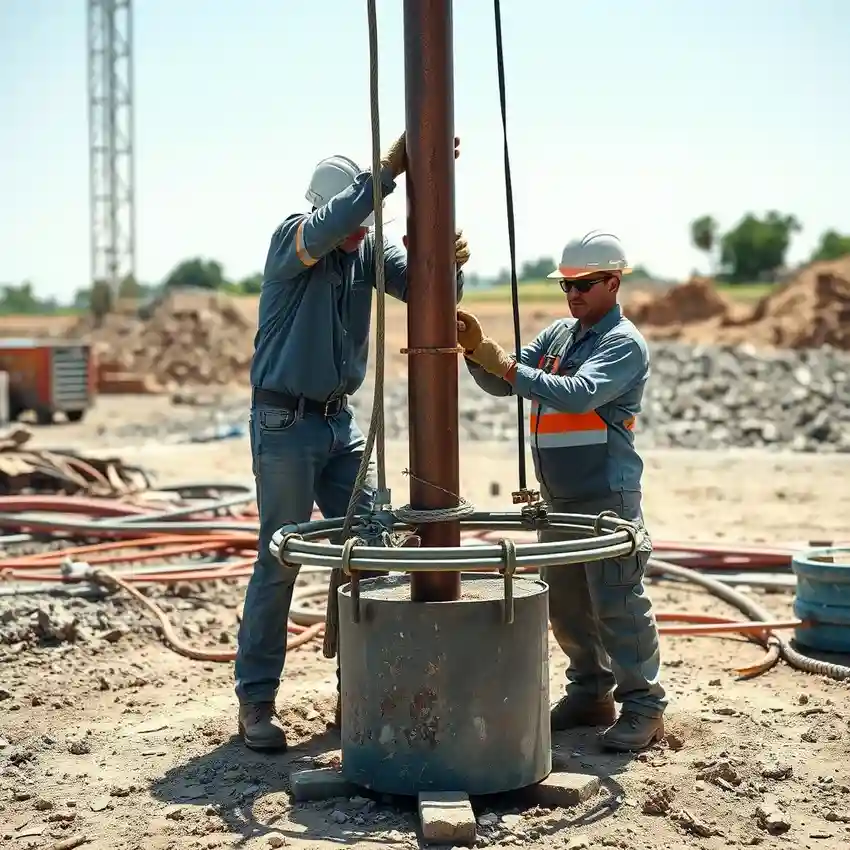
Our approach in Salt Lake City begins with a comprehensive site evaluation to understand the local hydrogeology. We integrate historical well data, geologic maps, and topographic analysis to identify the most promising aquifer targets, whether in the valley-fill aquifers or the consolidated formations. The subsequent water well drilling phase is tailored to these conditions, employing techniques suitable for everything from coarse alluvial gravels to hard sandstone. We meticulously log all formations, install proper casing and screen, and develop the well to maximize sustainable yield and protect water quality from potential surface contaminants.
Reference Technical Parameters
| Parameter | Reference Value |
|---|---|
| Predominant Soil Type | Alluvial Gravels, Sands, and Silts |
| Bedrock Depth (Valley Floor) | 100 - 2000+ ft (Highly Variable) |
| Typical Groundwater Level | 10 - 100 ft below ground surface |
| Maximum Seismic Acceleration (PGA) | Up to 0.4g (Site-Specific) |
| Typical N60 Range (Alluvium) | 15 - 50+ (Variable with Depth) |
Local Considerations — Salt Lake City
The hydrogeology of Salt Lake City is dominated by the deep, heterogeneous sediments of Lake Bonneville, offering significant but variable water storage. Groundwater levels are generally shallowest near the Jordan River and deeper towards the valley edges. Seismic activity from the Wasatch Fault zone necessitates careful well design, including proper grouting and casing to prevent aquifer contamination during seismic events. Contrasts are evident between the deep, high-yield wells possible in the central valley and the more challenging, fractured-rock wells in the Avenues or Sugar House areas. A typical challenge is navigating the sharp interface between freshwater and the deep, saline brine layer, which requires precise hydrogeological survey work to avoid. For complex projects in major regional hubs, our team also provides extensive expertise through our water well drilling services from Denver.
Request a Quote
Our team reviews your project and issues an initial report at no cost.
Or write us directly at [email protected]
Services in Salt Lake City
Applicable Standards
- Utah State Code (Water Rights & Appropriation)
- Salt Lake County Health Department Regulations
- Well Construction Standards (UIC Program)
- Local Municipal Ordinances
Frequently Asked Questions
How does the soil and geology in Salt Lake City affect well drilling?
The valley's deep alluvial deposits, consisting of layers of gravel, sand, and clay, can offer excellent water yield but require precise screen placement to target the most productive zones. In the foothills, drilling transitions into fractured limestone and sandstone, where yield depends on successfully intersecting water-bearing fractures. Understanding this geology is critical for efficient drilling and long-term well performance.
Are there specific seismic design considerations for wells here?
Yes. Due to the high seismic hazard from the nearby Wasatch Fault, well construction must account for ground shaking and potential liquefaction in saturated, loose sediments. This influences casing material selection, grouting specifications, and the design of the wellhead to maintain integrity and prevent a pathway for contaminants during and after a seismic event.
Is a groundwater study mandatory before drilling a well in Salt Lake City?
While a formal study may not always be legally mandated for a single domestic well, securing a water right from the state is. A professional hydrogeological assessment is strongly recommended, and often required by counties, to prove the availability of water, define the appropriate depth and construction method, and ensure the well does not interfere with existing rights or saline water zones.