Methodology
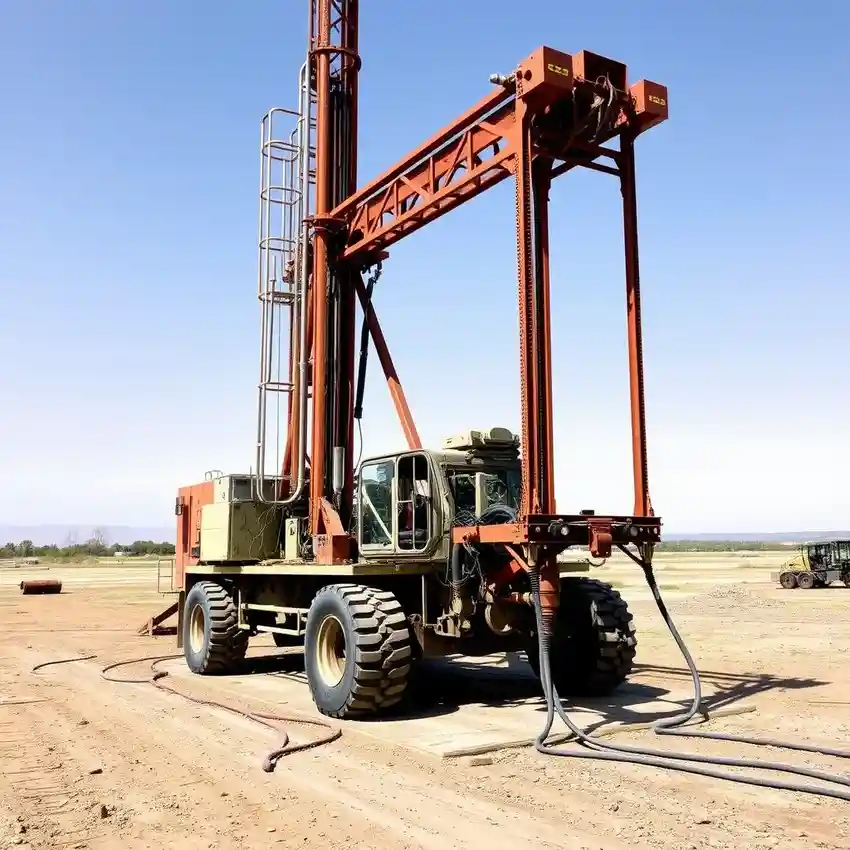
Our approach in Sacramento begins with a thorough review of existing well logs and geologic surveys to understand the subsurface stratification. We then proceed with site-specific investigation to pinpoint the most promising aquifer zones within the valley fill. The actual water well drilling process is tailored to the encountered sediments, often requiring careful techniques to prevent borehole collapse in loose sands before installing a properly screened and developed well to ensure long-term yield and water quality.
Reference Technical Parameters
| Parameter | Reference Value |
|---|---|
| Predominant soil type | Alluvial clay, silt, sand, and gravel |
| Maximum seismic acceleration (PGA) | 0.3g - 0.4g (Site Class D) |
| Typical groundwater level (depth to water) | 10 - 50 ft below surface |
| Bedrock depth (valley floor) | 200 - 1000+ ft |
| Typical aquifer material | Sands and gravels with interbedded clays |
Local Considerations — Sacramento
The Sacramento Valley's geology is defined by deep alluvial deposits from the Sierra Nevada. Groundwater levels are generally shallow but can show significant seasonal fluctuation. Seismic activity is a critical design factor, requiring robust well construction. Contrasts exist between the deeper, more confined aquifers in the valley center and the shallower, more complex strata near the American and Sacramento River corridors. A typical challenge involves isolating poor-quality water from shallow clay layers to target the cleaner, high-yield sands below, a process where a detailed hydrogeological survey is invaluable. For large-scale regional projects, insights from our water well drilling operations based in Los Angeles are often integrated.
Request a Quote
Our team reviews your project and issues an initial report at no cost.
Or write us directly at [email protected]
Services in Sacramento
Applicable Standards
- California Sustainable Groundwater Management Act (SGMA)
- Central Valley Regional Water Quality Control Board Regulations
- Local County Well Ordinances (e.g., Sacramento County)
- California Well Standards (Bulletin 74)
Frequently Asked Questions
What are the main soil and aquifer challenges for water well drilling in Sacramento?
The primary challenge is the heterogeneity of the alluvial deposits. Successive layers of clay, silt, sand, and gravel require precise identification to correctly screen the well in the most permeable zones. Furthermore, the presence of fine sediments necessitates proper well development techniques to achieve optimal specific capacity and prevent sand pumping.
How does seismic activity influence well design and construction here?
Seismic loads require that the well casing, especially through the upper unsaturated zone, be designed to resist shear forces and buckling. Grouting specifications and the selection of couplings are critical to maintain well integrity during seismic events, preventing collapse or contamination pathways.
Is a hydrogeological study mandatory before drilling a well in Sacramento County?
While not always mandatory for single domestic wells, most counties in the Sacramento Valley strongly recommend or require a preliminary hydrogeological assessment for new agricultural, industrial, or municipal wells. This is crucial for permitting under SGMA and for ensuring the well does not adversely impact neighboring water rights or aquifer stability.