Methodology
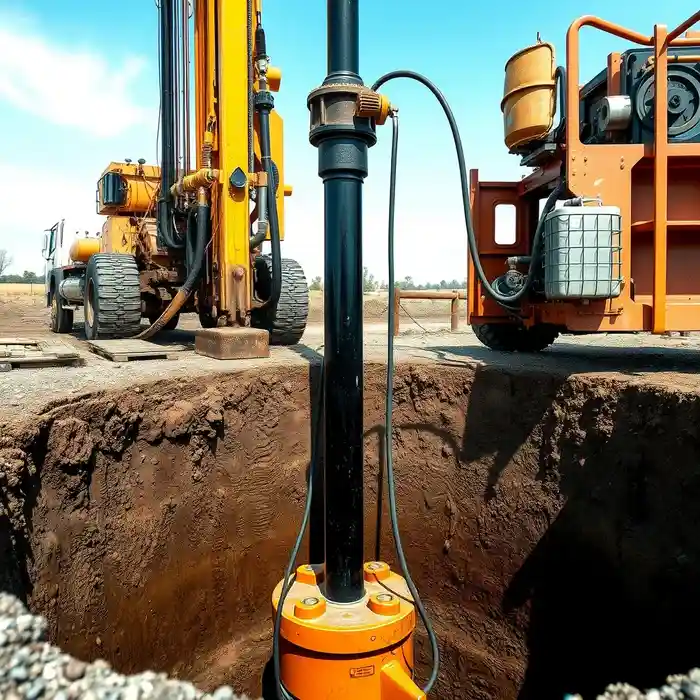
Our approach to water well drilling in Las Vegas begins with a thorough understanding of the valley's basin-fill sediments. We assess the sequence of clay, silt, sand, and gravel layers to identify the most productive zones for well screen placement. The process involves careful drilling through unconsolidated materials, often encountering caliche layers, to reach the saturated zone. Proper well development is critical here to remove fine sediments and maximize specific capacity, ensuring a clean, efficient water supply. For a detailed breakdown of our process, see our page on water well drilling.
Reference Technical Parameters
| Parameter | Reference Value |
|---|---|
| Predominant Soil Type | Alluvial deposits (clay, silt, sand, gravel) |
| Maximum Seismic Acceleration (PGA) | 0.4g (Site Class D, IBC) |
| Typical Groundwater Level | Variable, historically deep (>100 ft in many areas) |
| Bedrock Depth | >500 ft to underlying carbonate rock |
| Typical SPT N60 Range | Wide range, from <10 in loose fills to >30 in dense alluvium |
Local Considerations — Las Vegas
1. Geology & Soil: The Las Vegas Valley is filled with hundreds of feet of Quaternary alluvial deposits, primarily clays, silts, sands, and gravels, with caliche (calcium carbonate) layers common in the unsaturated zone. 2. Water Table: Groundwater levels have declined significantly due to historical pumping but remain accessible, with depths varying greatly across the valley. 3. Seismicity: Located in a seismically active region, well design must account for liquefaction potential in saturated, loose sandy soils. 4. Neighborhood Contrast: Well yield and depth can differ markedly between the central valley and outlying areas due to variations in sediment deposition and historical water use. 5. Typical Cases: Successful wells require precise targeting of coarse-grained sedimentary layers, often necessitating a professional hydrogeological survey prior to drilling. For major regional projects, our expertise extends from here to water well drilling services based in Los Angeles.
Request a Quote
Our team reviews your project and issues an initial report at no cost.
Or write us directly at [email protected]
Services in Las Vegas
Applicable Standards
- Nevada Revised Statutes (Water Law)
- Southern Nevada Water Authority Regulations
- International Building Code (IBC) for Seismic Design
Frequently Asked Questions
What soil conditions are most challenging for water well drilling in Las Vegas?
The presence of thick, cemented caliche layers can significantly slow drilling progress and damage equipment. Additionally, sequences of interbedded clays and fine sands pose a risk of well silting if not properly developed and screened. Accurate identification of these conditions is essential for efficient project planning.
How does local seismicity influence well construction?
Seismic design considerations are paramount. Wells must be constructed with materials and grouting techniques that maintain integrity during ground shaking. In areas with high liquefaction potential, special attention is paid to the well casing and seal to prevent collapse or contamination from surface water intrusion.
Is a hydrogeological study mandatory before drilling a well in Las Vegas?
While not always mandated for all well types, a professional hydrogeological study is highly recommended and often required by the State Engineer for appropriation permits. It is critical for determining the availability of water, identifying the optimal drilling location and depth, and ensuring the proposed use does not impair existing water rights.