Methodology
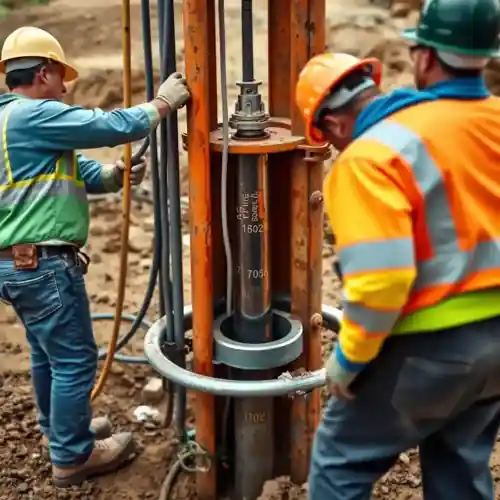
Our approach in Escondido begins with a thorough site assessment, integrating regional geological maps and local well logs to understand subsurface conditions. We then proceed with the actual water well drilling, selecting techniques—such as rotary or cable tool—based on the expected formation, whether it's unconsolidated alluvium or fractured bedrock. Throughout the process, we meticulously log cuttings, install appropriate casing and screen, and develop the well to ensure optimal yield and longevity, specifically tailored to the valley's hydrogeology.
Reference Technical Parameters
| Parameter | Reference Value |
|---|---|
| Predominant Soil/Rock Type | Alluvial Sand & Gravel / Decomposed Granite |
| Typical Groundwater Level | 50 - 250 ft (15 - 76 m) BGS |
| Typical Bedrock Depth | Variable, 20 - 100 ft (6 - 30 m) in alluvial areas |
| Maximum Seismic Acceleration (PGA) | 0.4 - 0.6g (Seismic Zone 4, CBC) |
Local Considerations — Escondido
Key local considerations for water well drilling in Escondido include: 1) Soil and Geology: Valley areas feature sandy alluvium, while eastern foothills involve weathered granite, directly impacting drilling method and well design. 2) Groundwater Depth: Water tables are deeper in upland areas, requiring greater drilling depths. 3) Seismic Activity: Located in a seismically active region, well casing and grouting must account for ground shaking potential. 4) Neighborhood Contrasts: Well yields and depths can differ significantly between the central valley and the Harmony Grove area. 5) Typical Cases: Many successful wells tap into the alluvial aquifer along the river corridor, often preceded by a detailed hydrogeological survey to confirm suitability. For major regional projects, our primary operations hub offers extensive support; learn more about our comprehensive water well drilling services from our Los Angeles base.
Request a Quote
Our team reviews your project and issues an initial report at no cost.
Or write us directly at [email protected]
Services in Escondido
Applicable Standards
- California Water Code
- Sustainable Groundwater Management Act (SGMA)
- Local Escondido Municipal Code
- California Well Standards (Bulletin 74)
Frequently Asked Questions
What are the main soil types in Escondido that affect well drilling?
The two primary formations are unconsolidated alluvial deposits in the valley, which are generally easier to drill but require careful screening, and decomposed granite in the foothills, which can be stable but may have lower well yields. Identifying the correct formation is crucial for selecting the drilling method and well design.
How does seismic activity influence well construction here?
Escondido is in a high seismic hazard zone. Our well designs account for this by ensuring robust casing connections, proper grouting to prevent aquifer contamination during seismic events, and selecting installation depths that consider potential liquefaction in saturated alluvial soils.
Is a hydrogeological study mandatory before drilling a well in Escondido?
While not always mandated by the city for single residential wells, a professional hydrogeological study is highly recommended and often required by the California Department of Water Resources for larger withdrawals or within SGMA-regulated basins. It is a critical step to assess water availability, avoid interference with neighboring wells, and ensure regulatory compliance.