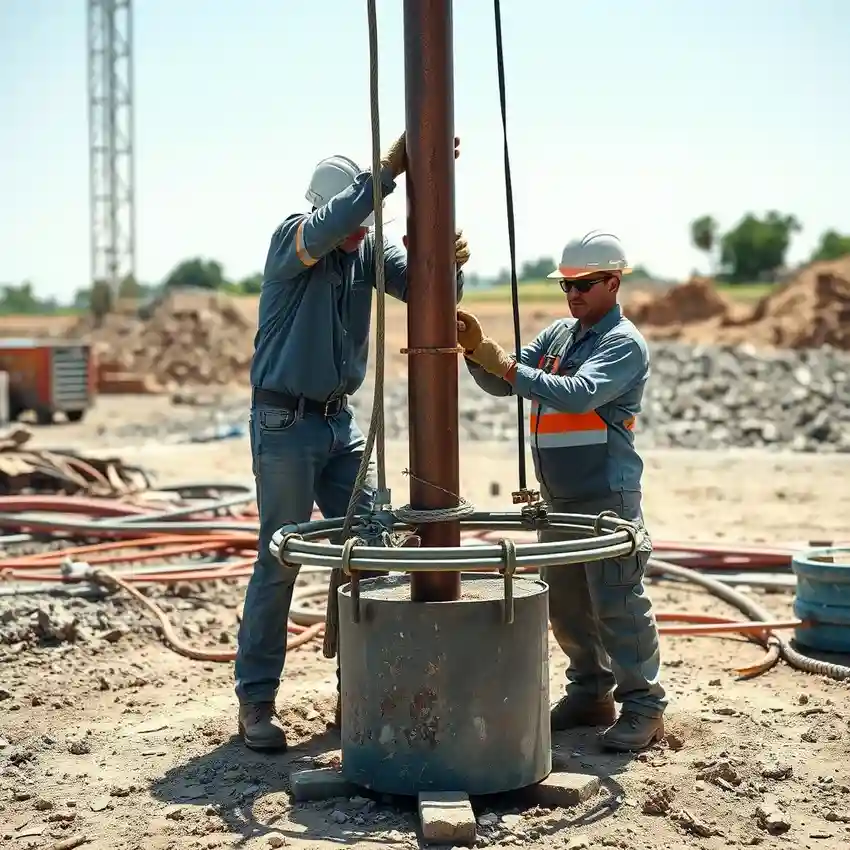
Methodology
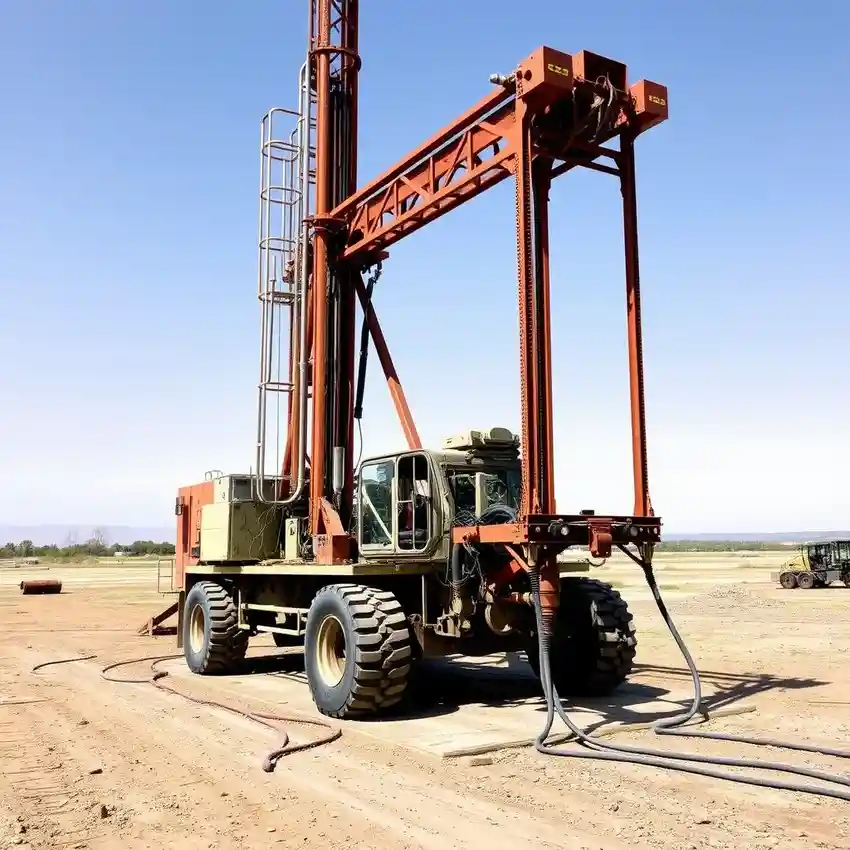
Our approach in Corpus Christi begins with a thorough assessment of the site's potential, considering the complex interplay between the shallow Chicot and Evangeline aquifers and the underlying clay layers. We employ advanced techniques for water well drilling, selecting the appropriate method—whether rotary or percussion—based on the depth to the target water-bearing zone and the nature of the subsurface materials. Careful well construction, including proper casing and screen selection, is critical to prevent saltwater intrusion and ensure long-term well integrity.
Reference Technical Parameters
| Parameter | Reference Value |
|---|---|
| Predominant Soil Type | Clay, Sand, and Sandy Clay |
| Typical Groundwater Level | 10 - 100 ft below surface |
| Bedrock Depth | Generally > 500 ft (Catahoula Formation) |
| Maximum Seismic Acceleration (PGA) | Site-specific, per local hydrogeological investigation |
Local Considerations — Corpus Christi
The local geology in Corpus Christi is defined by its position on the Gulf Coastal Plain. The water table is generally shallow but can exhibit significant variability, especially near the coastline where the risk of saltwater intrusion necessitates careful well design and depth selection. Seismic activity, while less pronounced than in other parts of Texas, is considered in well construction standards. In areas with expansive clay soils, such as parts of the Southside, proper well grouting is essential to prevent casing damage. For complex projects, a preliminary hydrogeological survey is often recommended to accurately map aquifer characteristics. Our team in Houston also supports major regional projects, offering extensive experience in water well drilling services from our Houston hub.
Request a Quote
Our team reviews your project and issues an initial report at no cost.
Or write us directly at [email protected]
Services in Corpus Christi
Applicable Standards
- Texas Administrative Code (TAC) Chapter 290
- Texas Water Development Board (TWDB) Guidelines
- Local Corpus Christi and Nueces County Regulations
Frequently Asked Questions
What are the common soil challenges for water well drilling in Corpus Christi?
The presence of expansive clays and loose sands can pose stability challenges during drilling and require specific casing and grouting techniques. Furthermore, the alternating layers of sand, clay, and gravel that comprise the local aquifers require precise screen placement to optimize water yield and quality.
Are there specific regulations for well construction due to seismic risk?
While not in a high seismic zone, well construction standards in Texas and local codes require design and materials that ensure structural integrity. Proper cement grouting is mandated to seal the well annulus, which also contributes to seismic resilience by stabilizing the casing.
Is a water quality test required after drilling a new well in Corpus Christi?
While not always legally mandated for private wells, a comprehensive water quality analysis is strongly recommended. This is critical for detecting minerals common to the area and ensuring the water is safe for its intended use, especially given the proximity to coastal saline waters.