Methodology
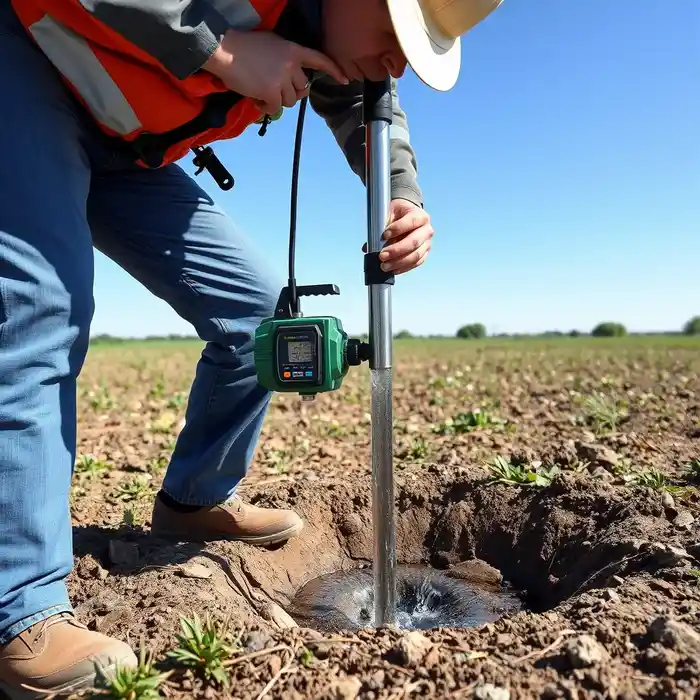
Our approach in Charlotte begins with a thorough evaluation of your property's potential. We analyze regional hydrogeological maps and site-specific conditions to identify the most promising zones for water well drilling. Drilling through the region's weathered saprolite and into competent bedrock requires specific techniques and equipment, which our experienced crew selects based on the anticipated subsurface profile. We prioritize a methodical process to locate a sustainable water source while minimizing environmental impact and ensuring the structural integrity of the well.
Reference Technical Parameters
| Parameter | Reference Value |
|---|---|
| Predominant Soil Type | Clayey Saprolite (weathered rock) |
| Typical Bedrock Depth | 15 - 100 feet |
| Typical Groundwater Level | 20 - 80 feet below surface |
| Maximum Seismic Acceleration (PGA) | 0.12g - 0.18g |
| Typical Standard Penetration Test (SPT) N60 Range in Saprolite | 10 - 30 blows/foot |
Local Considerations — Charlotte
Charlotte's unique geology presents specific challenges for well construction. The transition from thick layers of clay-rich saprolite to fractured crystalline bedrock like granite and gneiss dictates drilling methods and casing requirements. Groundwater levels can vary significantly with topography, being shallower in low-lying areas near creeks and much deeper on upland sites. In neighborhoods like Ballantyne or along the Catawba River, the depth to water and well yield can differ dramatically from areas in the University City region. A proper hydrogeological survey is not just advisable but often critical for success. Furthermore, while seismic risk is moderate, well design should account for ground stability, a standard upheld by our primary team for comprehensive water well drilling services from our Atlanta hub.
Request a Quote
Our team reviews your project and issues an initial report at no cost.
Or write us directly at [email protected]
Services in Charlotte
Applicable Standards
- North Carolina Well Construction Act
- Local County Health Department Regulations
- AWWA Standards
Frequently Asked Questions
What type of soil and rock will you drill through for a well in Charlotte?
In Charlotte, drilling typically progresses through layers of clay-rich saprolite, which is deeply weathered rock, before reaching the underlying crystalline bedrock, such as granite or gneiss. The thickness of the saprolite is highly variable, and the bedrock is often fractured, which can be a primary source for groundwater. Understanding this profile is essential for selecting the right drilling equipment and well casing design.
Are there specific seismic building codes that affect well construction here?
While Charlotte is in a region of moderate seismic risk, the primary design focus for water wells is on structural integrity against settling and collapse in the variable soils. Construction practices follow stringent state codes that ensure resilience against hydrogeological failures. Our designs inherently account for ground stability factors relevant to the local seismic profile.
Is a hydrogeological study mandatory before drilling a water well in Mecklenburg County?
While not always mandated by code for every single-family property, a professional hydrogeological survey is highly recommended and may be required for certain lots or larger commercial projects. It is a critical step to assess the aquifer's yield, water quality potential, and optimal drilling location, ultimately saving time and resources by preventing dry or low-yield wells.