Methodology
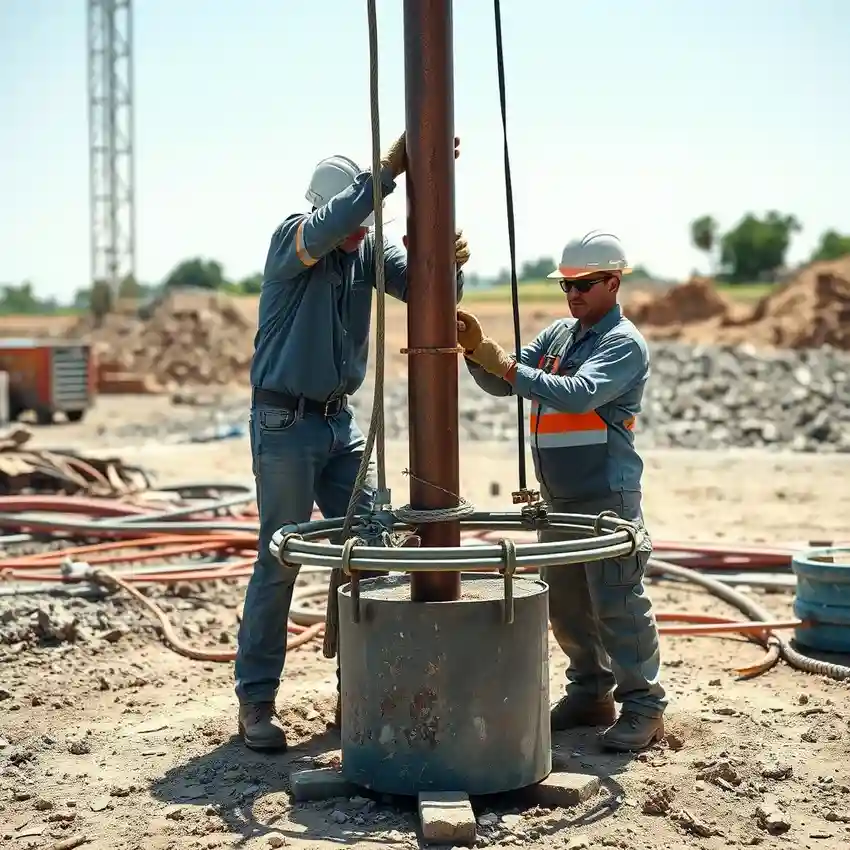
Our approach in Allentown begins with a thorough review of available geological survey data and county records to understand the subsurface profile. We then proceed with a site-specific assessment to identify the optimal location for yield and water quality. The actual water well drilling process is executed with equipment suited to the prevalent rock formations, employing techniques designed to efficiently penetrate the sedimentary layers while ensuring proper well casing and sealant installation to protect the aquifer, all in strict adherence to state and local standards.
Reference Technical Parameters
| Parameter | Reference Value |
|---|---|
| Predominant Bedrock Type | Interbedded Shale and Limestone (Brunswick Formation) |
| Typical Bedrock Depth | 10 - 50 ft (variable with overburden) |
| Typical Groundwater Level | 20 - 100 ft below surface |
| Maximum Seismic Acceleration (PGA) | Site Class Dependent, per local code |
| Typical Overburden Soil | Glacial Till and Alluvial Deposits |
Local Considerations — Allentown
The local context in Allentown is defined by five key factors. First, the geology is dominated by the Brunswick Formation, comprising fractured shale and limestone, which influences drilling speed and bit selection. Second, the water table depth is variable, generally ranging from 20 to 100 feet, heavily influenced by topography and proximity to the Lehigh River. Third, while seismic risk is moderate, proper well construction accounts for ground stability. Fourth, contrasts exist between the deeper bedrock wells in elevated areas like the West End and shallower wells in the floodplains near the river. Finally, a common scenario involves navigating tight shale layers to reach productive limestone fractures, a process where a preliminary hydrogeological survey provides critical insight, much like our established work provides for comprehensive water well drilling services from our Philadelphia hub.
Request a Quote
Our team reviews your project and issues an initial report at no cost.
Or write us directly at [email protected]
Services in Allentown
Applicable Standards
- Pennsylvania Chapter 73 Well Construction Standards
- Allentown City Code
- Pennsylvania Department of Environmental Protection (PA DEP) Regulations
Frequently Asked Questions
What soil and rock conditions are most common for water well drilling in Allentown?
The subsurface in Allentown typically features a layer of glacial till and alluvial soils overlying the Brunswick Formation bedrock. This bedrock is a sequence of fractured shale and limestone. Successful well drilling here requires equipment and expertise capable of penetrating these hard, layered sedimentary rocks to access the water-bearing fractures, which is a standard challenge our team is equipped to handle.
Are there specific seismic design considerations for wells in this area?
While not in a high seismic zone, Allentown's building codes incorporate seismic design categories. For well construction, this translates to ensuring proper grouting and casing installation to maintain well integrity under any potential ground motion. Our procedures follow all relevant code requirements for seismic resilience.
Is a geological study mandatory before drilling a water well in Allentown?
While not always mandated by code for every single-family residential well, a professional site evaluation is highly recommended. Given the variability of the bedrock and water table, such an assessment significantly increases the likelihood of drilling a productive, well-constructed water source and is considered a best practice, especially for commercial or agricultural applications.